

City
Gainesville commissioners vote 5-2 to explore automated parking enforcement
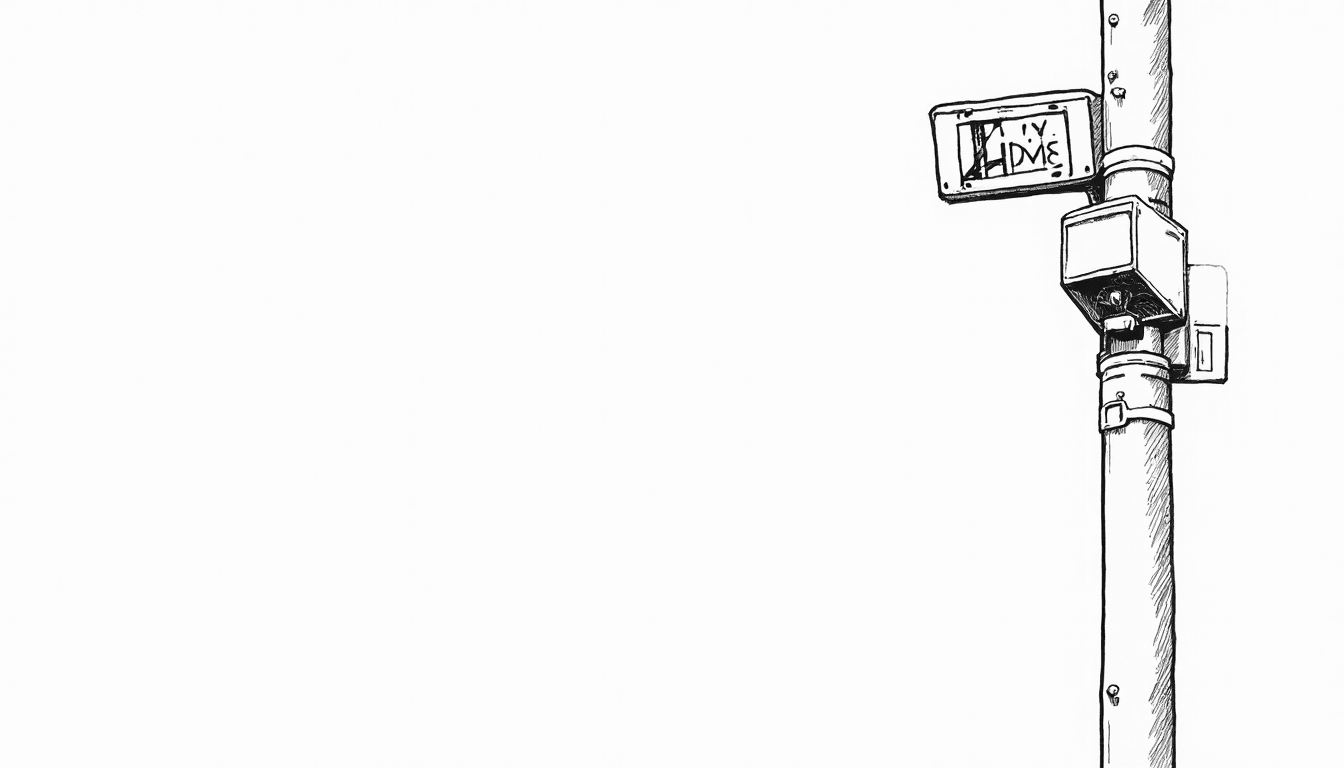
Gainesville City Commissioners approved a review of automated parking enforcement technology Thursday, with the measure passing 5-2. The devices use radar and license plate cameras and are projected to generate roughly $160,000 annually for the city. Commissioners Casey Willits and Cynthia Chestnut voted against the review, while Bryan Eastman supported it after noting that no Florida city currently uses this particular enforcement mechanism. Any formal adoption would require a change to city ordinance.
Point / Counterpoint
The Ledger is neutral; these essays are not. Each side, as steel-manned as we can make it.
Point
Gainesville’s decision to study automated parking enforcement is a sensible, data-driven step toward modernizing how the city manages its public spaces. The 5-2 vote merely opens a review — it commits to nothing — yet it positions Gainesville to seriously examine a tool that could generate nearly $160,000 a year without requiring the city to hire additional parking enforcement officers. In an era when municipal budgets are perpetually strained and labor costs continue to rise, technology that pays for itself and then some deserves careful consideration rather than reflexive rejection.
The core purpose of parking enforcement is not punitive; it’s about turnover — ensuring that downtown storefronts, medical offices, and public facilities have accessible spaces for the people who need them. Manually patrolling parking zones is labor-intensive and inconsistent. Automated systems equipped with radar and license plate cameras enforce the rules uniformly, around the clock, without the fatigue, discretion gaps, or staffing costs associated with human officers. Consistent enforcement is fairer enforcement.
Commissioner Eastman’s observation that no Florida city currently uses this exact mechanism is worth taking seriously, but not as an argument against exploration — rather as a reason to be thorough. Florida cities are not necessarily ahead of the curve on municipal technology adoption; being first in a category that works well elsewhere is an opportunity, not a red flag. License-plate-based enforcement is already in wide use for tolling, school zones, and red-light violations across the state, so the underlying technology is neither novel nor unproven.
A review costs the city very little. It allows commissioners to examine implementation details, privacy safeguards, vendor contracts, and the actual experience of comparable municipalities before voting on any ordinance change. Opposing the study itself — before a single data point has been gathered — forecloses the possibility of making an informed decision. Gainesville should complete the review, weigh the evidence, and then decide. That is exactly what responsible governance looks like.
Counterpoint
The 5-2 vote to review automated parking enforcement may seem procedurally modest, but the direction of travel matters — and commissioners Willits and Chestnut were right to pump the brakes. Commissioner Eastman himself acknowledged the uncomfortable truth embedded in this proposal: no Florida city has adopted this particular automated enforcement mechanism. That is not a coincidence. It reflects legitimate, unresolved concerns about surveillance infrastructure, due process, and the appropriate role of technology in everyday civic life.
License plate camera systems don’t just record a single infraction and move on. They generate time-stamped location data for every vehicle that passes through the enforcement zone — including those that are parked legally. Over time, that data creates detailed movement profiles of ordinary residents. Who owns that data? How long is it retained? Can it be subpoenaed, sold to third parties, or accessed by other government agencies? These are not hypothetical concerns. Cities across the country that adopted similar camera-based enforcement systems — often under the same revenue-projection logic being used here — later discovered that the surveillance footprint extended well beyond the original, narrow use case.
The projected $160,000 in annual revenue also deserves skepticism. Automated systems reliably generate revenue in part by being indiscriminate — issuing citations in circumstances where a human officer might exercise judgment. A broken meter, a vehicle belonging to a disabled resident whose placard briefly slipped, a delivery driver making a thirty-second stop: automated systems don’t make those calls. They ticket. When city revenue becomes structurally dependent on automated citation income, there is a well-documented tendency for enforcement thresholds to tighten and fine amounts to creep upward — not to improve compliance, but to protect the revenue stream.
Gainesville should not import a surveillance and revenue model that other Florida cities have declined to adopt simply because a vendor’s estimate looks attractive on a budget spreadsheet. The commissioners who voted no weren’t obstructing good governance — they were insisting that the city ask harder questions before it hands control of a public enforcement function to a camera system whose long-term costs, in privacy and community trust, are far harder to measure than a projected annual yield.
Sources: WCJB TV20