

Education
Florida Board of Governors delays vote on Stuart Bell as UF president
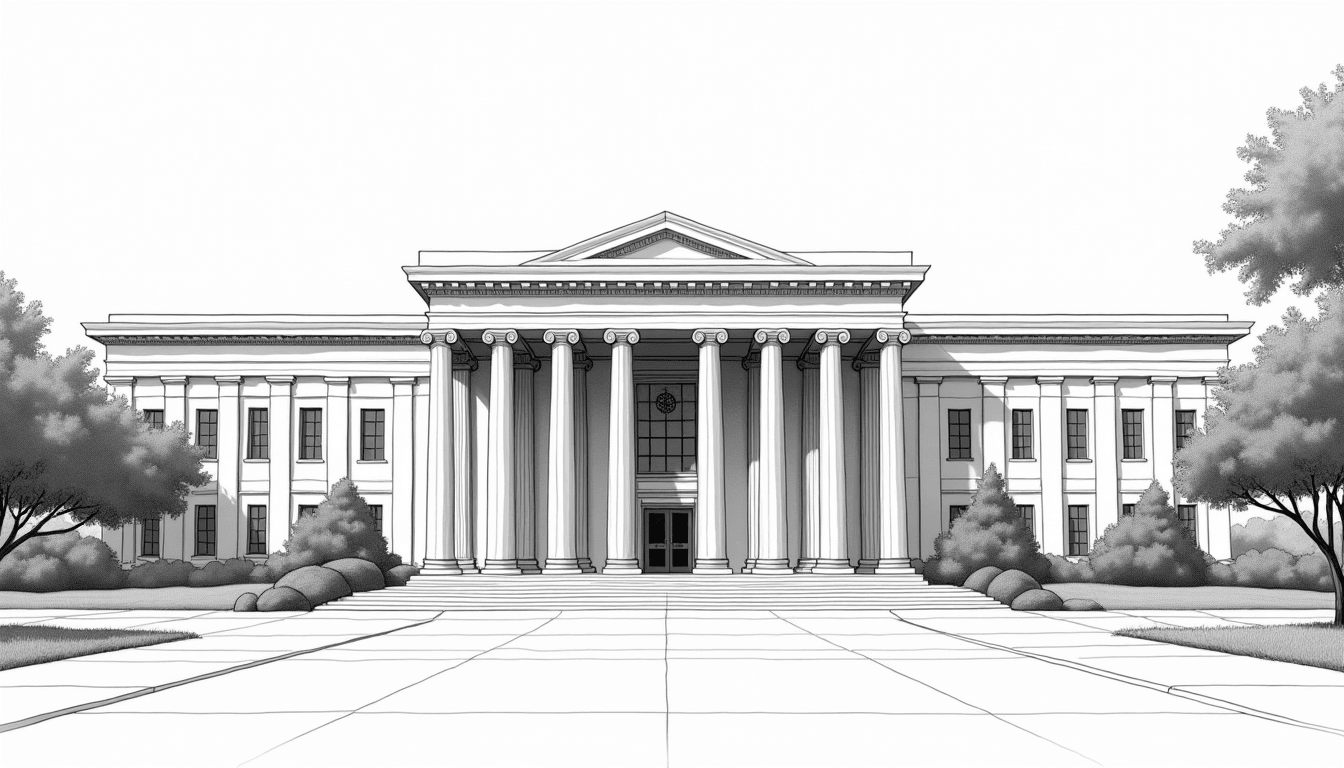
The Florida Board of Governors has postponed a planned vote to confirm Dr. Stuart Bell as University of Florida president, with the board’s chair citing concerns about whether the UF Board of Trustees has improperly delegated certain authorities to its chairman, Mori Hosseini. In response, the UF Board of Trustees will instead consider naming Bell as interim president at a meeting next week. The delay follows a letter from Board of Governors Chair Alan Levine outlining the governance dispute.
Point / Counterpoint
The Ledger is neutral; these essays are not. Each side, as steel-manned as we can make it.
Point
The Florida Board of Governors is doing exactly what a responsible oversight body should do: pause before ratifying a consequential leadership appointment when credible questions about procedural integrity have been raised. The presidency of the University of Florida — one of the nation’s top public research universities — is not a routine hire. It is a decision that will shape the institution’s academic direction, its relationships with faculty, students, and donors, and its standing in higher education for years to come. Getting the process right matters as much as the outcome.
At the heart of this delay are allegations that the UF Board of Trustees has been improperly delegating certain authorities to its chairman, Mori Hosseini. If true, that is not a technicality — it is a structural problem. Boards of trustees exist precisely to distribute governance responsibility among members who are collectively accountable to the public and the state. When those authorities are concentrated in a single chair without proper sanction, it undermines the deliberative function the board is supposed to serve. A presidential selection made under those conditions carries a legitimacy deficit from the start.
Board of Governors Chair Alan Levine’s intervention reflects an appropriate exercise of state-level oversight. Florida’s public university system operates under a layered governance structure for good reason: it provides checks against both political capture at the local level and unilateral decision-making by individual actors. When a university’s own trustees may be operating outside their sanctioned authority, the Board of Governors is precisely the body empowered to intervene. Delaying the vote until those concerns are resolved is not obstruction — it is governance.
Critics may argue that the delay prolongs institutional uncertainty and disadvantages Dr. Bell, who has already endured a public vetting process. That concern deserves acknowledgment. But the remedy for a flawed process is not to ratify its results anyway — it is to correct the process and proceed on solid footing. An interim appointment while the governance questions are resolved allows the university to maintain leadership continuity without foreclosing a proper resolution. The Board of Governors is not blocking Bell’s candidacy; it is insisting that whoever leads UF arrives with the full, unambiguous backing of a properly functioning governance structure.
Counterpoint
The Florida Board of Governors’ decision to delay the confirmation of Dr. Stuart Bell as UF president, at the eleventh hour and over procedural disputes about how the board of trustees delegates its internal authority, is a troubling overreach that threatens to destabilize one of the state’s flagship institutions over a governance dispute that could have been raised months ago.
Dr. Bell completed a full, public search process. He participated in open forums, fielded questions from the UF community, and emerged as the chosen candidate of the institution’s own board. Former trustees have publicly urged the state board to confirm him. The UF Board of Trustees — the body closest to the university and most directly accountable for its operation — was prepared to move forward. Injecting a last-minute procedural challenge about how the board chair exercises delegated authority does not serve the university; it subordinates UF’s leadership needs to an intra-governmental turf dispute between two oversight bodies.
There is also a question of timing and proportion. Questions about the delegation of authority to Trustee Chairman Mori Hosseini, if they are genuine governance concerns, could have been raised and addressed during the months-long presidential search. Surfacing them at the moment of confirmation vote creates maximum disruption with minimum opportunity for remedy. It forces the university into an interim appointment arrangement that prolongs uncertainty for faculty, students, staff, and prospective partners who depend on stable institutional leadership to make their own decisions.
Beyond the immediate situation, the precedent is worrying. Florida’s public universities have, in recent years, seen increasing state-level intervention in their internal governance — from faculty hiring to curriculum to the composition of boards themselves. When the Board of Governors can delay a settled presidential appointment over questions about how a board chair handles delegated authority, it sends a signal that no institutional decision is truly final until the state ratifies it on its own timetable. That dynamic, if normalized, makes it harder for UF to attract and retain the kind of leadership willing to navigate a governance environment in which the rules can shift at any moment. Resolving internal procedural disputes is legitimate; using them as a lever to delay a leadership transition is something else.
Sources: WCJB TV20 · The Gainesville Sun · The Independent Florida Alligator · Mainstreet Daily News