

City
City commissioners ask School Board to reconsider Citizens Field purchase amid contamination
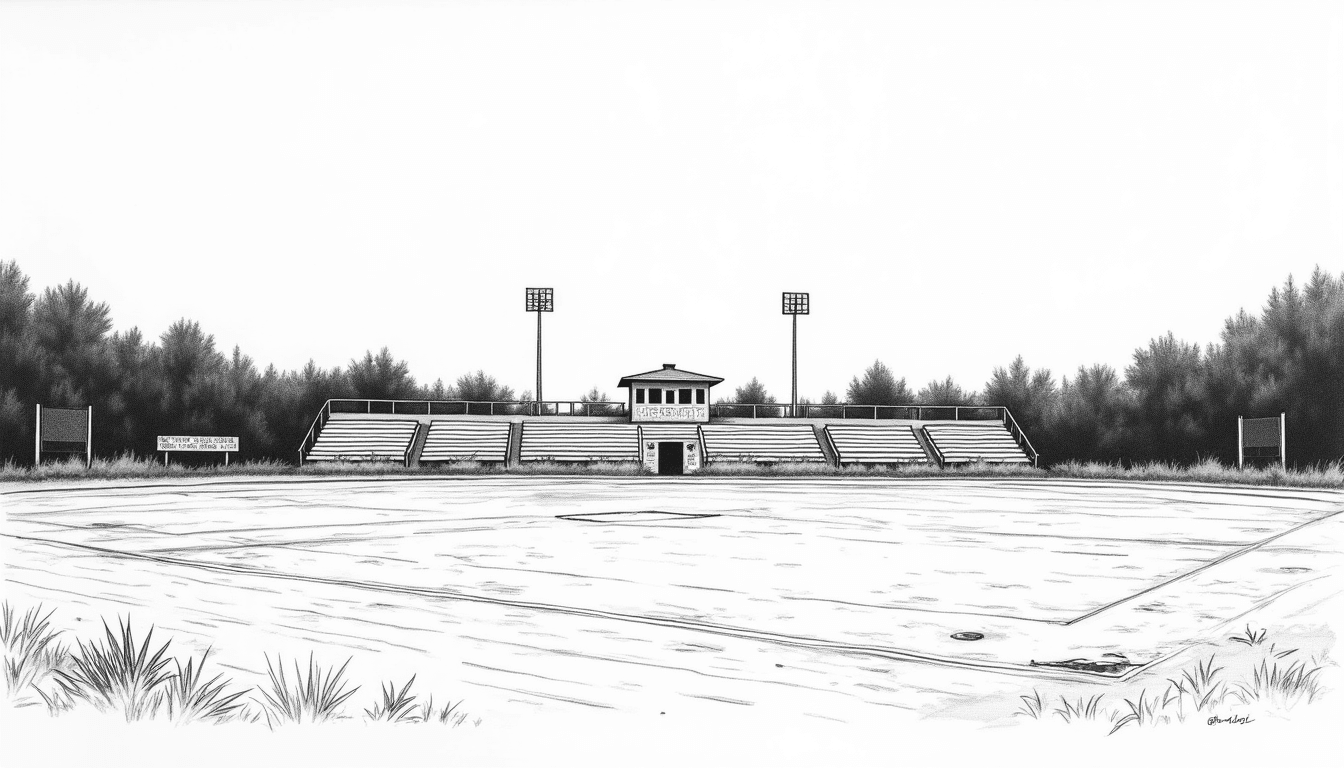
Gainesville city commissioners voted Thursday to formally inquire whether Alachua County school leaders would still consider purchasing Citizens Field, despite known ground contamination at the site. The school board had voted earlier in the week to explore options related to rebuilding the stadium. City staff noted the contamination stems from a former dump north of the property and residual heating oil from a storage tank removed in the 1980s.
Point / Counterpoint
The Ledger is neutral; these essays are not. Each side, as steel-manned as we can make it.
Point
The city commission’s decision to reach out to the school board about Citizens Field makes practical and civic sense, even with the contamination on the table. Transparency about environmental conditions is not the same as disqualification — it is the foundation of an informed negotiation. City staff have already characterized the contamination as legacy issues: a long-closed dump to the north and trace heating oil from a tank removed nearly four decades ago. These are not novel, active threats. They are known quantities that can be assessed, priced, and mitigated.
Disposing of a public asset like Citizens Field without exhausting every legitimate buyer is fiscally irresponsible. The school board’s Tuesday vote to explore stadium rebuilding options signals genuine institutional interest in the site. If the school district ultimately walks away after a full review, that is a reasoned outcome. But closing the door before the conversation starts — letting contamination function as a conversation-stopper rather than a negotiating variable — would shortchange Gainesville taxpayers who have a stake in how this property is transferred and at what value.
Municipal governments across the country regularly complete transactions on brownfield-adjacent or lightly contaminated properties through remediation agreements, purchase price adjustments, and phased cleanup timelines. The presence of environmental issues is a factor in due diligence, not a veto. Florida’s Brownfields Redevelopment Act exists precisely to facilitate these transactions, providing liability protection and cleanup funding mechanisms. The commissioners are not asking the school board to ignore the contamination — they are asking whether a deal can be structured around it.
In a city that has long struggled with the fate of its aging public facilities, keeping Citizens Field in public hands for educational and athletic use is a far better outcome than a prolonged vacancy or a distressed sale. The commission’s vote is not recklessness — it is stewardship.
Counterpoint
There is a reason the school board voted to explore rebuilding options rather than jumping at Citizens Field: purchasing a contaminated site on behalf of schoolchildren and public funds is not a routine negotiation, and the city commission’s eagerness to push the transaction forward deserves scrutiny. Framing ground contamination from an old dump and residual heating oil as mere legacy inconveniences glosses over what could become a serious long-term liability for a school district operating on a constrained budget.
School districts are not redevelopment agencies. They are not equipped — financially or institutionally — to serve as the cleanup vehicle for a municipal property the city itself has not fully remediated. If the contamination were trivial, the city would have addressed it. The fact that it persists and must be disclosed in a proposed sale suggests the cleanup costs are real. Agreeing to buy the site could saddle the district with environmental obligations that divert resources away from classrooms, teachers, and students. That is a poor trade for any school board acting in the public interest.
The commission’s vote also raises a process question: why is the city lobbying the school board rather than conditioning any sale on completed or funded remediation first? A more responsible sequence would be for the city to clean up its own mess, establish a clear environmental baseline, and then present the school district with a site ready for development. Instead, the commissioners appear to be inviting the school board to absorb an uncertain liability — and doing so with unusual urgency given that the school board had only just begun its own deliberations days earlier.
Public institutions owe their constituents caution when environmental contamination is involved. The school board should conduct a rigorous independent assessment before entertaining any purchase, and should not let the city’s interest in offloading the property compress the timeline for that due diligence.
Sources: WCJB TV20