

State & National
Google to connect Palm Coast to Europe via undersea cable amid local pushback
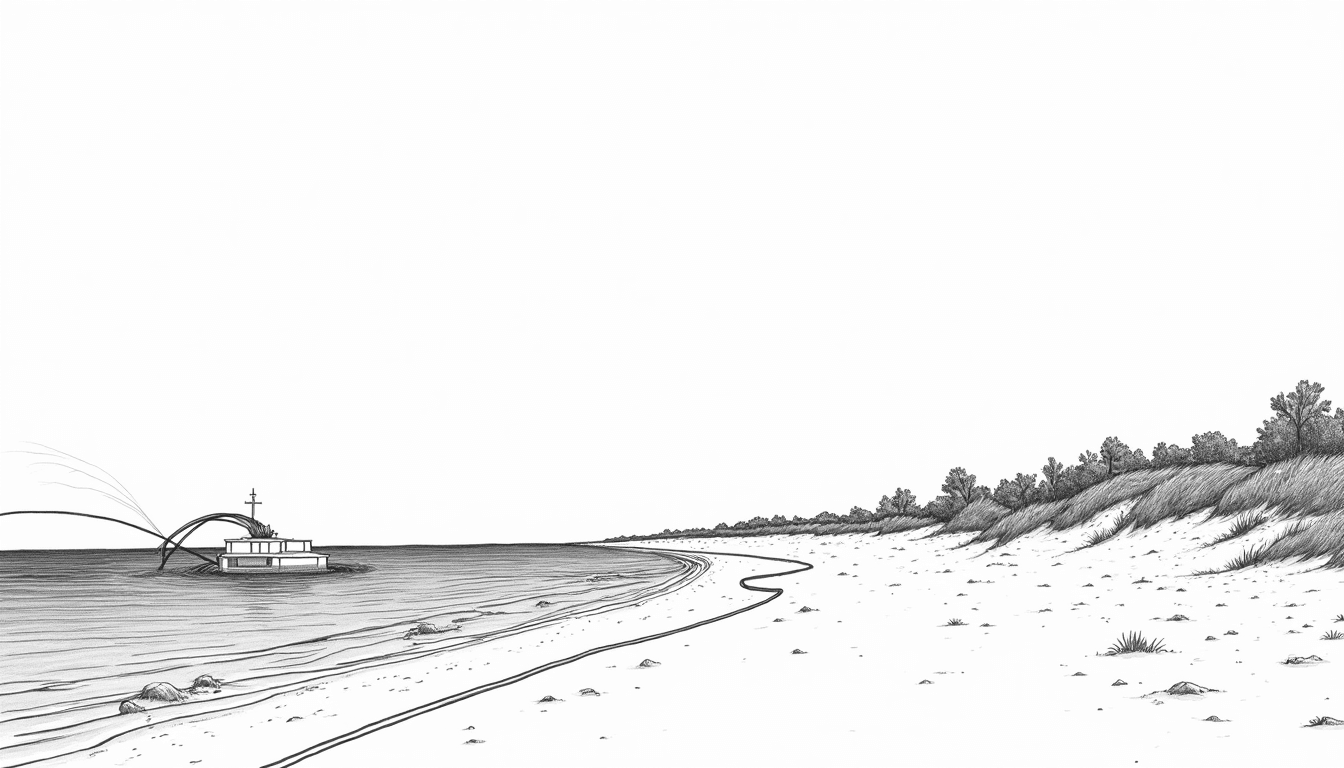
Google plans to establish a subsea cable landing station in Palm Coast, a small Northeast Florida city, as part of a multibillion-dollar expansion of its cloud and artificial intelligence infrastructure. The project, expected to go live early next year, would link the area to Europe, though not all residents and stakeholders are in support of the development.
Point / Counterpoint
The Ledger is neutral; these essays are not. Each side, as steel-manned as we can make it.
Point
Google’s decision to anchor a transatlantic subsea cable in Palm Coast represents the kind of transformative economic investment that small and mid-sized American cities rarely attract. Subsea cable infrastructure is the invisible backbone of the modern global internet — undersea fiber carries roughly 95 percent of international data traffic — and a landing station places Palm Coast at a literal crossroads of global commerce. For a city of fewer than 100,000 people on Florida’s northeast coast, the ripple effects of being chosen by one of the world’s most valuable companies cannot be overstated.
The economic case is straightforward. Major technology infrastructure projects bring construction jobs, permanent technical employment, and secondary business activity. They also send a signal to other investors that a community has the physical infrastructure, regulatory environment, and workforce to support serious capital commitments. Cities that have attracted data centers and cable landing stations — from Ashburn, Virginia to Hillsboro, Oregon — have used that anchor investment to build lasting technology corridors. Palm Coast could follow the same trajectory.
Beyond local economics, there is a national interest argument. The United States is engaged in an intensifying competition with China and other rivals over control of digital infrastructure, including undersea cables. American companies building robust, domestic landing points for transatlantic cables strengthens the country’s strategic position and reduces dependence on foreign-controlled chokepoints. Opposing a project like this in the name of local preference risks subordinating a genuine national infrastructure need to neighborhood aesthetics.
Google’s investment also arrives at a moment when artificial intelligence is placing extraordinary new demands on data networks. Cloud computing and AI workloads require low-latency, high-bandwidth connections between continents — precisely what a new subsea cable delivers. Communities that position themselves as nodes in that infrastructure will be far better placed for the economic geography of the next two decades than those that turn such projects away.
Counterpoint
The enthusiasm surrounding Google’s Palm Coast cable project deserves scrutiny, not a rubber stamp. When a multibillion-dollar corporation describes its plans as universally beneficial, the community that will actually live with the consequences has every right to ask hard questions — and in Palm Coast, some residents are doing exactly that.
The concerns are not simply aesthetic. Large-scale technology infrastructure projects impose real costs on communities: industrial construction on coastal or near-coastal land, potential environmental impacts on local ecosystems, and the conversion of community-oriented land use to heavily secured, largely sterile corporate facilities. Palm Coast sits in a region of northeast Florida with ecologically sensitive areas, and a cable landing station is not a passive installation — it requires ongoing operations, security perimeters, and supporting infrastructure that can reshape the character of a neighborhood permanently.
There is also a broader equity question about who actually benefits. Subsea cables and the cloud services they support generate enormous wealth for shareholders and senior employees concentrated in tech hubs like the Bay Area and Seattle. The jobs created locally at a cable landing facility are often limited in number and specialized in nature — not the broad employment base that would justify a community accepting significant disruption. When cities offer land use accommodations or other inducements to attract this kind of project, residents deserve a transparent accounting of what they are giving up and what they are realistically getting in return.
Finally, the framing of opposition as provincial or uninformed is itself a form of pressure that should be resisted. Local communities have legitimate authority over their land use, their coastlines, and their civic character. The fact that a corporation is large and its technology is widely used does not extinguish that authority. The residents of Palm Coast who are pushing back are exercising a democratic right that deserves to be heard on its own terms, not dismissed as an obstacle to inevitable progress.
Sources: WUFT News