

State & National
Activists flood Bradford County meeting to oppose immigrant detention center plan
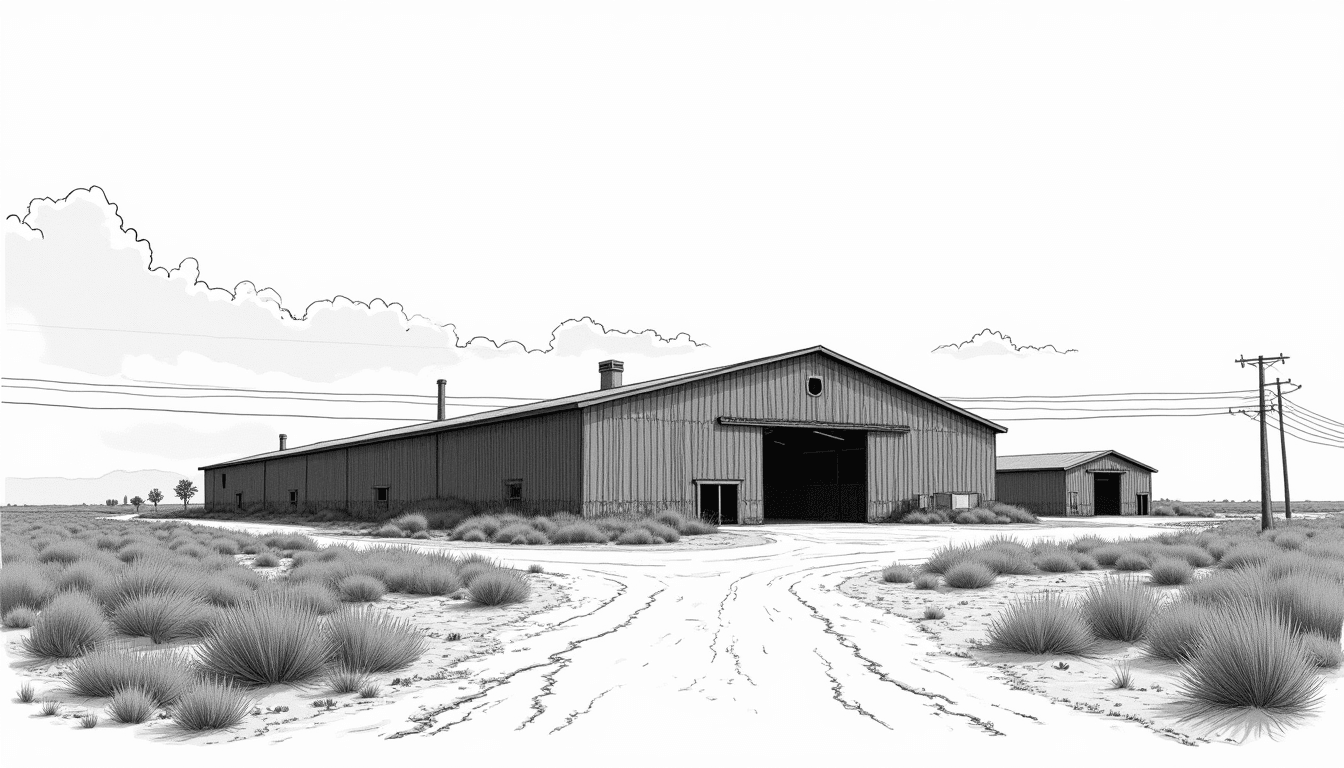
More than 40 speakers traveled from Alachua, Clay, and several other counties to a Bradford County Commission meeting on April 16, urging commissioners to reject a proposal to lease a warehouse to the sheriff’s department for a 3,000-bed immigrant detention facility. The sheriff, who promoted the plan as a way to rehabilitate the Douglas warehouse and generate roughly 1,200 jobs, did not appear at a prior meeting, and commissioners said they would keep all options open. Complicating the proposal are environmental contamination concerns at the site, a lack of water and sewer infrastructure adequate for the facility’s scale, and a competing offer from an import company to lease the same property.
Point / Counterpoint
The Ledger is neutral; these essays are not. Each side, as steel-manned as we can make it.
Point
The Bradford County Commission should firmly close the door on the proposed immigrant detention center at the Douglas warehouse, and the outpouring of civic opposition at the April 16 meeting makes the case better than any bureaucratic analysis could. More than 40 residents — drawn from Alachua, Clay, Gilchrist, Baker, and as far away as Jacksonville and St. Augustine — showed up with only 48 hours’ notice. That kind of mobilization does not happen over trivial concerns. It signals that communities across north-central Florida understand what is at stake when a county government quietly entertains a deal that could reshape the region’s character and expose vulnerable people to harm.
The proposal’s procedural history alone warrants skepticism. It was added to the agenda at the last minute, the sheriff who championed it failed to appear at the previous meeting to defend it, and the concept quietly shifted from a county-owned development project to leasing the property directly to the sheriff’s department — a move that would effectively hand authority to a single elected official and remove the commission’s oversight. Sound governance requires transparency, not agenda-item ambushes.
The physical realities of the site are equally disqualifying. The Douglas warehouse sits on land contaminated with volatile organic compounds. The Florida Department of Environmental Protection recently negotiated access to conduct testing precisely because those contaminants could be disturbed. Detaining up to 3,000 human beings on a site with unresolved environmental hazards and no water or sewer infrastructure capable of supporting that population is not a development opportunity — it is a public health liability. Any future litigation stemming from detainee medical harm or environmental violation would fall squarely on Bradford County taxpayers.
Meanwhile, a legitimate alternative already exists: a three-year lease with an import company at $50,000 per year. That offer rehabilitates the warehouse for conventional commercial use, avoids the ethical and legal minefield of immigration detention, and still advances the county’s economic interest. The commissioners have a cleaner path in front of them. The community showed up in force to point it out.
Counterpoint
Bradford County is one of Florida’s smaller, rural counties, and its leaders have a genuine responsibility to pursue economic development wherever a credible opportunity arises. The Douglas warehouse proposal — however imperfectly introduced — deserves a full and fair hearing rather than a politically charged shutdown. The sheriff’s argument that converting the warehouse could bring 1,200 jobs to the county is exactly the kind of promise that rural communities rarely get to evaluate, and reflexively killing it based on activist pressure from neighboring counties does a disservice to Bradford residents who actually bear the cost of economic stagnation.
The procedural complaints are overstated. Last-minute agenda additions are not uncommon in local government, and the commission responded appropriately by explicitly keeping all options on the table rather than making a hasty decision in either direction. That is the posture of a deliberative body doing its job. The fact that the sheriff missed the prior meeting is worth noting, but it is hardly evidence of conspiracy — it is evidence that the commission needs more information before deciding, which is precisely what a responsible body should acknowledge.
The environmental and infrastructure concerns are real, but they are engineering problems, not moral verdicts. The FDEP agreement for unrestricted site testing is the correct response — let the science determine what the land can safely support. Many industrial redevelopment projects in Florida and nationally have proceeded successfully on sites with legacy contamination once proper remediation protocols were followed. Water and sewer deficiencies are likewise solvable with capital investment, much of which the federal contracting arrangement with ICE and DHS could fund. Dismissing the proposal before that analysis is complete conflates caution with capitulation.
Finally, the geography of the opposition matters. The bulk of the speakers at the April 16 meeting came from outside Bradford County, drawn by activist networks rather than lived stakes in the local economy. That solidarity is constitutionally protected, and the concerns raised are legitimate to consider. But elected commissioners represent Bradford residents, not regional coalitions. If the warehouse can be safely remediated, properly permitted, and economically beneficial to the county, the commission owes its own constituents a sober evaluation — not a decision driven by the loudest voices in a packed room.
Sources: The Gainesville Iguana